01 Why

What matters is knowing why you're designing in the first place.

The tools will keep

20+ years of design.
Graphic. Motion. UX. Product.
Figuring out what works, by
learning from when it doesn't.

00 /30
02 How

Design is for people.

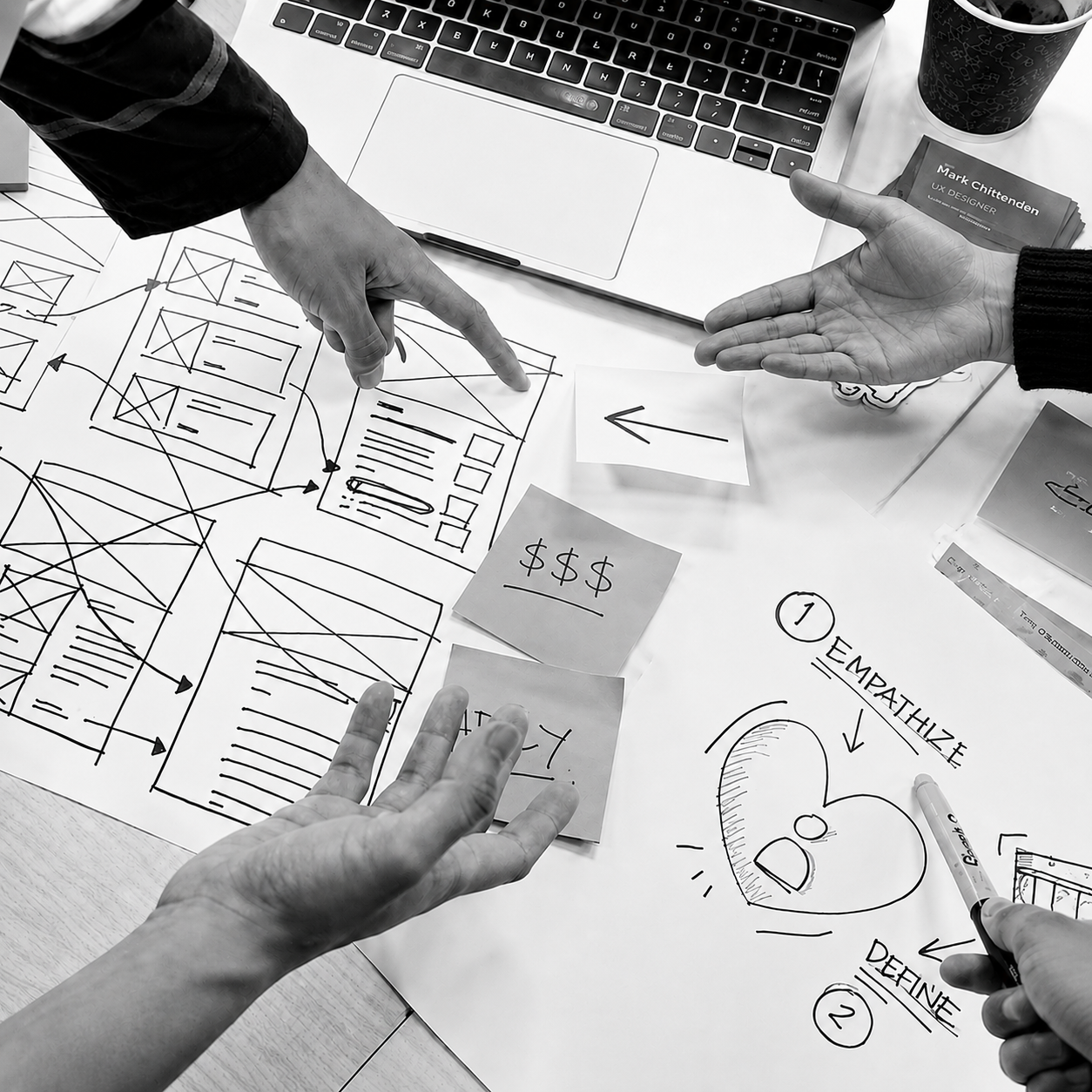
Good design starts with understanding who we're designing for, what they need, and what gets in their way. Then we make it clearer, easier, more useful and hopefully a little more enjoyable.

03PROOF

“Design isn't something I do alone anymore.”

MARK CHITTENDEN 2001 - PRESENT

THE LESSONS THAT SHAPE THE WORK.

01_

Does the user
know what they
want?

Listen, investigate.

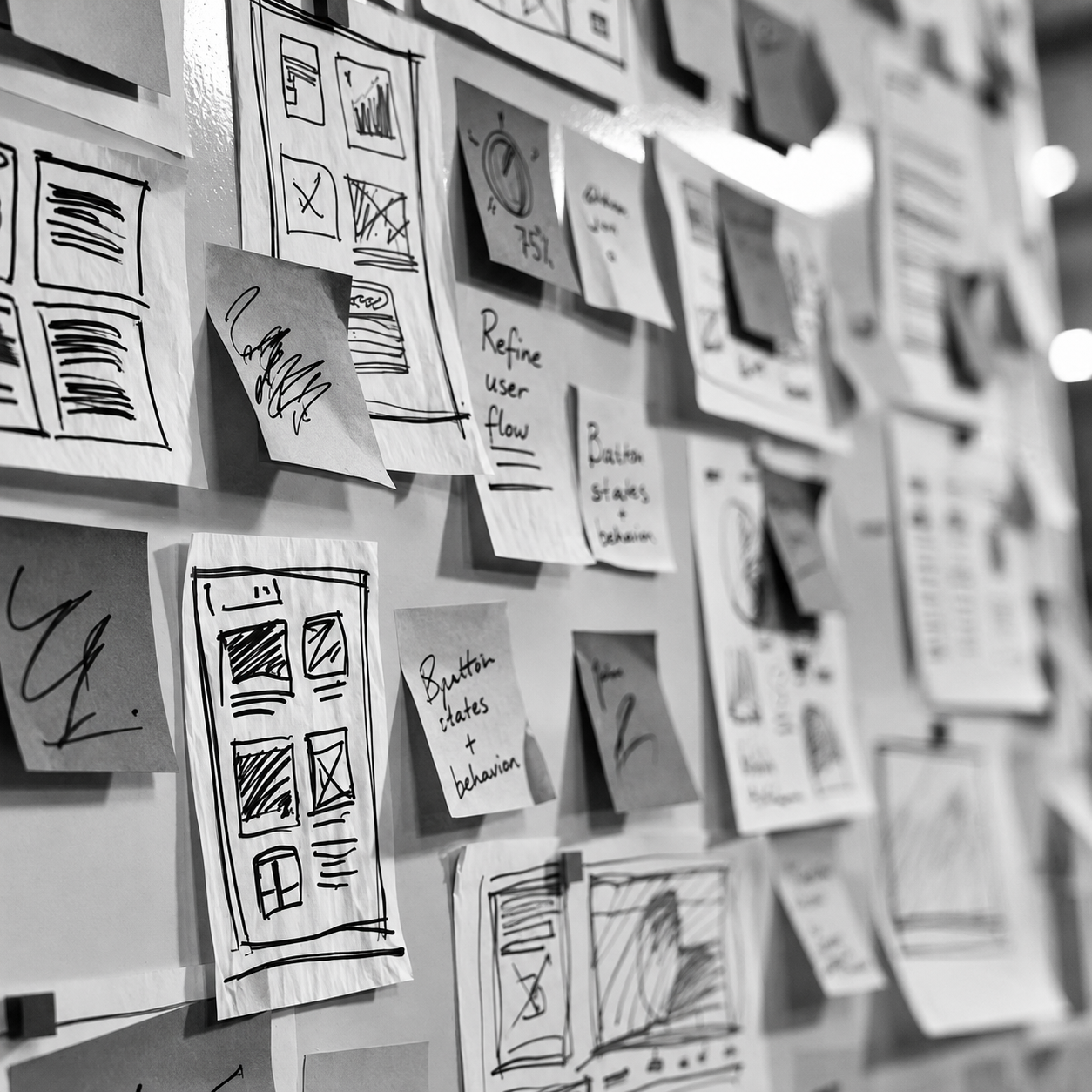
Users are experts in their own experience, but that doesn't mean the solution they ask for is necessarily the solution they need. Listen, observe, interview and keep asking why. Then take what you've learned and synthesize it. Find the patterns, behaviors, frustrations and opportunities hiding underneath the answers. It's not about asking users to design the solution. It's about understanding the problem well enough to design the right one.
where am i?
  • User research
  • Interviews
  • Observation
  • Synthesis
  • Empathy
  • Problem
  • definition
02_

Who are we
really designing
for?

Understand whose needs we're balancing.

The user matters. So does the customer, the business, the stakeholder and the developer. They don't always want the same thing. Some of the hardest design problems are about navigating those competing priorities, challenging assumptions and creating enough shared understanding to move forward. The goal is to make those conversations productive, turning opinions into questions we can explore, test and make decisions around.

where am i?
  • Stakeholders
  • User needs
  • Business goals
  • Facilitation
  • Requirements
  • Prioritization
03_

Am I designing
for them
or me?

Recognize your bias. Then design past it.

Every designer has preferences. Colors we love, layouts we gravitate toward and patterns we've used successfully before. Experience has taught me that “I like it” isn't a design rationale. Start with the problem. Explore and ideate rather than becoming attached to the first solution. Use information architecture, established design patterns, accessibility, color theory, hierarchy and context to make deliberate decisions. The goal isn't to create something that . It's to create something that's right.

Slaps: exceptionally good. Apparently.
where am i?
  • Ideation
  • Information architecture
  • Design patterns
  • Color theory
  • Accessibility
  • Visual hierarchy
04_

What happens
when the budget
says no?

Design within reality.

Every project eventually meets reality: budget, deadlines, technology, legacy systems, scope, resources and sometimes simply “we can't do that.” Constraints don't stop good design. They make it more important. Reframe the problem, prioritize, prototype and find the MVP. Work with developers to understand what's possible, and recognize that sometimes the ideal solution isn't the right solution right now. Good design isn't just something that could work. It has to be able to exist.

where am i?
  • Constraints
  • MVP
  • Scope
  • Prototyping
  • Feasibility
  • Prioritization
  • Collaboration
05_

“I will NOT
move it one
pixel.”

Don't be precious. Know when detail matters.

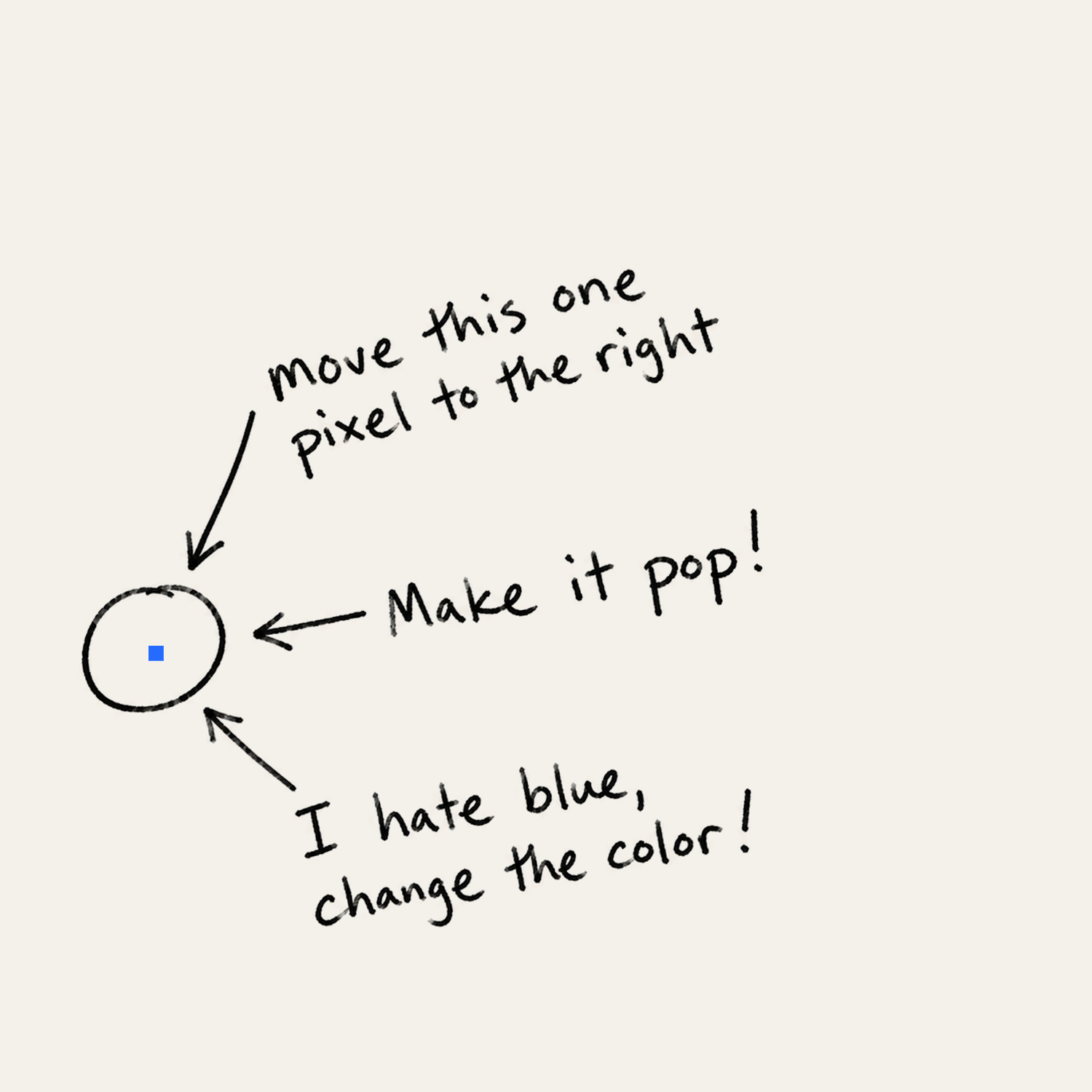
As an artist, I can become incredibly attached to my work. I've learned not to. A wireframe doesn't need to be beautiful, a prototype doesn't need to be perfect and an MVP doesn't need every interaction polished. Sometimes learning from something imperfect is infinitely more valuable than another afternoon of refinement. Progress over perfection. But craft still matters. Hierarchy, alignment and consistency matter. Experience is knowing when to let it go... and when to go back and move the bloody thing one pixel.

where am i?
  • Iteration
  • Feedback
  • MVP
  • Refinement
  • Design systems
  • Craft
06_

Is AI going
to take my
job?

Tools change. Thinking evolves.

I've watched design technology transform throughout my career, and I've evolved with it. AI is another shift, although this one feels considerably bigger. Design thinking cannot be replaced, but design can be accelerated. Used right, AI lets me explore, ideate and challenge assumptions faster. It also helps with the things I'm not particularly good at, turning ideas into illustrations, prototypes and working code that I couldn't always create on my own. Faster output doesn't replace judgment. It makes judgment more important. AI can help me get somewhere faster. I still have to know where I'm trying to go.

where am i?
  • AI
  • Ideation
  • Exploration
  • Rapid prototyping
  • Development
  • Critical thinking
07_

What does
the user
want?

Eventually, you're not the only person asking.

Design thinking isn't owned by the designer. When a developer stops a technical discussion and asks, “What does the user want?” I get goosebumps. Because something has changed. The team isn't waiting for design to hand them an answer anymore. Developers, stakeholders and product owners are questioning assumptions, considering the user and solving problems together. The goal isn't to become the person with all the answers. It's to help build a team that asks better questions.

where am i?
  • Design thinking
  • Collaboration
  • User advocacy
  • Facilitation
  • Shared understanding
  • Culture

The evolution isn't about becoming a better designer. It's about getting designers, developers, users, clients and stakeholders solving the right problem together.

Design thinking
is the legacy.

04 Me

Me.

I'm a designer. I've been one for more than 25 years. I started in graphic design, moved into animation, then the web, interaction and UX. Now AI is changing the tools all over again, and I love that. I'm curious. I like figuring things out, asking why, taking complicated things apart and putting them back together in a way that makes more sense. I care about people, I care about how things work, and yes, I care about how they look. I'm not precious about process and I'm not interested in design theatre. Design thinking is the foundation.

PIXEL PERFECT* Find the blue one.
10 picks left. Score: 0
05 Hello

Say hello.

Humans only, please.